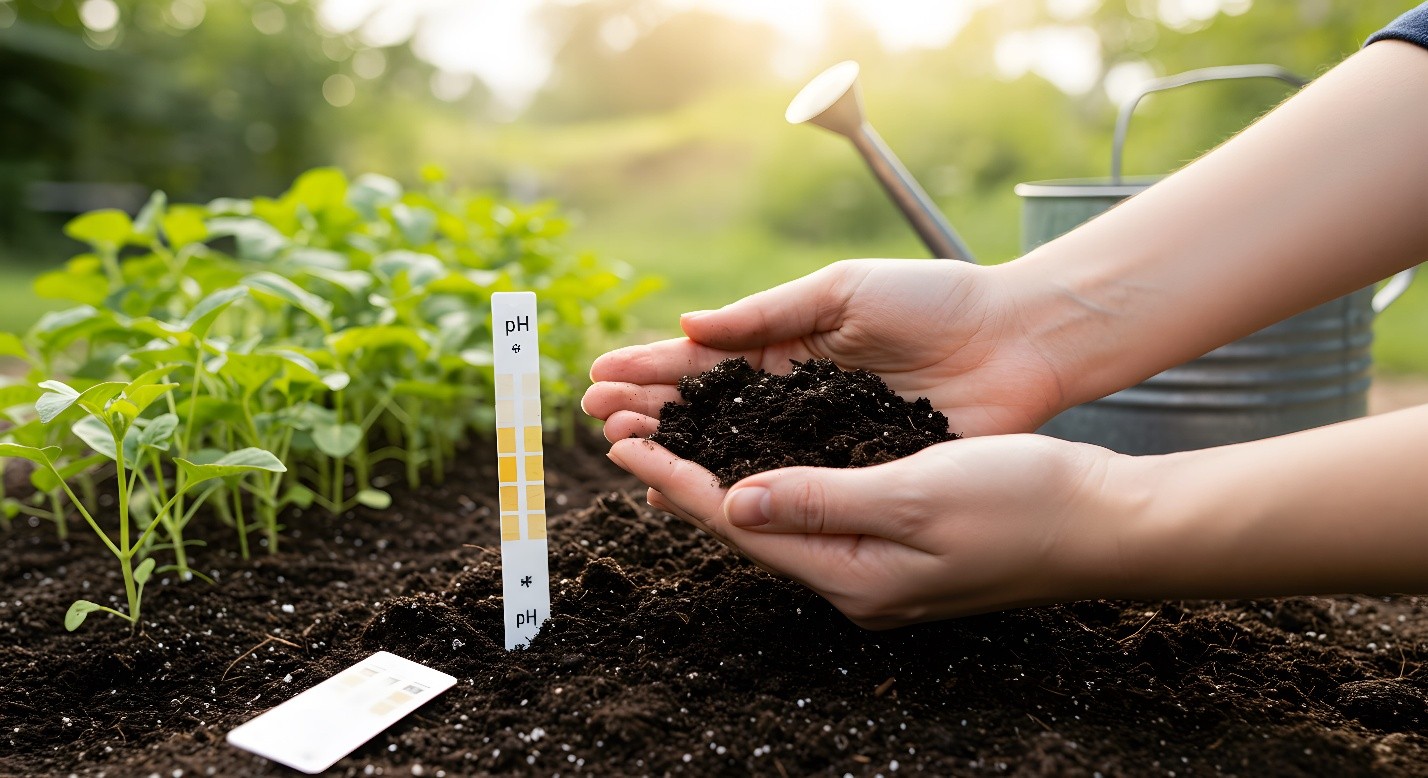
Healthy soil is one of the most important foundations of a successful garden. While gardeners often focus on watering schedules, sunlight exposure, and fertilizer applications, the chemical properties of soil has an equally significant influence on plant growth. One of these properties is soil pH, which measures how acidic or alkaline the soil is. Although soil pH may seem like a technical subject, understanding its basic principles can help gardeners make better decisions about plant selection, soil preparation, and long-term maintenance.
Different plants have different soil requirements, and conditions that support one species may be unsuitable for another. Some plants thrive in slightly acidic soil, while others tolerate neutral or alkaline environments. Soil pH also affects how easily plant roots can absorb essential nutrients, meaning that even nutrient-rich soil may not provide everything a plant needs if its pH falls outside an appropriate range. Saralyn Wasserman explains that by learning how soil pH works, recognizing potential problems, and using reliable testing methods, gardeners can create healthier growing environments and avoid unnecessary amendments.
What Is Soil pH?
Soil pH is a measurement of the acidity or alkalinity of soil, expressed on a scale ranging from 0 to 14. A pH of 7 is considered neutral, while values below 7 indicate acidic conditions and values above 7 indicate alkaline conditions. The scale is logarithmic, meaning that each whole-number change represents a tenfold difference in hydrogen ion activity. For example, soil with a pH of 5 is ten times more acidic than soil with a pH of 6. According to Penn State Extension, understanding this measurement is important because soil pH influences the chemical reactions that determine how nutrients become available to plants.[1]
Most common garden plants perform well in slightly acidic to neutral soil, although individual preferences vary considerably. A soil pH between approximately 6.0 and 7.0 supports the growth of many vegetables, flowers, and ornamental plants. However, this range should not be considered a universal requirement. Certain plants have adapted to more acidic environments, while others tolerate higher alkalinity. Soil pH is influenced by factors such as climate, rainfall, underlying minerals, and gardening practices. Understanding the existing conditions of a planting area can help gardeners choose plants that are naturally suited to their environment.
How Soil pH Influences Nutrient Availability
Plants require essential nutrients to develop healthy roots, stems, leaves, flowers, and fruit. These nutrients include nitrogen, phosphorus, and potassium, along with calcium, magnesium, iron, manganese, and several other elements. Although nutrients may already be present in the soil, plants cannot always absorb them efficiently. Soil pH influences the chemical forms of these nutrients and their availability to plant roots. The University of Maryland Extension explains that phosphorus, for example, becomes less available under strongly acidic or alkaline conditions because it can react with other elements in the soil.[2]
This relationship helps explain why plants sometimes develop nutrient deficiency symptoms, even when gardeners regularly apply fertilizer. If soil pH is unsuitable, adding more nutrients may not correct the underlying problem. In some cases, excessive fertilizer applications can create additional imbalances or contribute to nutrient runoff. Maintaining an appropriate pH allows plants to make more effective use of nutrients already present in the soil. For gardeners, this means that testing and understanding soil conditions should generally come before making significant changes to fertilization practices.
Understanding Acidic Soil Conditions
Acidic soil has a pH below 7, although the degree of acidity can vary considerably. Slightly acidic soil is suitable for many common garden plants, but strongly acidic conditions can interfere with nutrient availability and root development. As soil pH decreases, certain elements, including aluminum and manganese, may become more soluble. At sufficiently high concentrations, these elements can damage sensitive plants and restrict healthy root growth. Penn State Extension notes that excessive soil acidity can reduce nutrient availability, interfere with root development, and influence the activity of beneficial soil microorganisms.[3]
Acidic conditions are common in regions that receive substantial rainfall because water can gradually leach certain minerals from the soil. Some fertilizers and natural soil processes can also contribute to increasing acidity over time. However, acidic soil is not necessarily unhealthy or unsuitable for gardening. Many plants have evolved to thrive under these conditions and may struggle when grown in soil that is too alkaline. Rather than attempting to make every garden bed neutral, gardeners should determine whether the existing acidity is appropriate for the plants they intend to grow.
How Alkaline Soil Affects Plant Growth
Alkaline soil has a pH above 7 and is often associated with soils containing substantial amounts of calcium carbonate or other alkaline minerals. Although some plants tolerate these conditions well, others may struggle to obtain certain nutrients. Iron, manganese, and zinc can become less available as soil pH increases, potentially resulting in nutrient deficiencies. One common symptom is chlorosis, a condition in which leaves develop yellow discoloration because chlorophyll production is disrupted. In some cases, the tissue between leaf veins turns yellow while the veins remain green. The University of Georgia Cooperative Extension explains that excessively high soil pH can limit nutrient absorption and interfere with normal plant growth.[4]
Gardeners working with alkaline soil may notice that certain plants grow slowly, produce pale foliage, or fail to develop as expected. However, these symptoms can also result from improper watering, poor drainage, damaged roots, or other environmental conditions. A soil test is therefore important before attempting to correct suspected alkalinity problems. In some situations, choosing plants that naturally tolerate alkaline conditions is more practical than repeatedly modifying the soil. This approach can reduce maintenance requirements while supporting healthier long-term growth.
Why Different Plants Have Different pH Requirements
Plants have evolved in a wide variety of environments, and their soil preferences often reflect the conditions found in their natural habitats. Some species grow best in acidic forest soils, while others are adapted to grasslands, rocky landscapes, or areas with naturally alkaline soil. These differences influence how effectively their roots absorb nutrients and tolerate certain chemical conditions. For example, blueberries, azaleas, and rhododendrons are commonly described as acid-loving plants because they generally perform best when soil pH is considerably lower than the range preferred by many vegetables. The University of Maryland Extension identifies a pH range of approximately 4.5 to 5.5 as suitable for blueberries and several related acid-loving plants.[5]
Other garden plants prefer conditions closer to neutral. Many vegetables, including tomatoes, beans, and lettuce, generally perform well in slightly acidic soil, although their ideal ranges may differ. Some plants tolerate a broader range of conditions, making them more adaptable to different gardens. Understanding these preferences is particularly important when planning mixed planting areas. Gardeners should not assume that plants with similar watering or sunlight requirements necessarily prefer the same soil chemistry. Grouping species with compatible pH preferences can simplify soil management and reduce the need for repeated adjustments.
Recognizing Signs of Unsuitable Soil pH
Plants growing in soil with an unsuitable pH may display several warning signs. Yellowing leaves, slow growth, reduced flowering, and poor root development are among the possible symptoms. Some nutrient deficiencies produce recognizable patterns, such as yellowing between leaf veins or discoloration affecting older leaves before newer growth. However, these symptoms are not exclusive to soil pH problems. Inadequate sunlight, inconsistent watering, root diseases, and insect damage can create similar changes in appearance. The University of Georgia Cooperative Extension emphasizes that nutrient deficiency symptoms can resemble one another, making soil testing an important part of accurate diagnosis.[6]
Gardeners should evaluate the entire growing environment before assuming that soil acidity or alkalinity is responsible for poor plant health. Observing whether multiple plants in the same bed are experiencing similar symptoms may provide useful clues. Reviewing recent fertilizer applications, checking drainage, and examining root conditions can also help identify potential causes. If plants continue struggling despite otherwise appropriate care, measuring soil pH can help determine whether nutrient availability may be contributing to the problem. This approach allows gardeners to address underlying conditions rather than relying on unnecessary treatments.
How to Test Soil pH at Home
Testing soil pH is one of the most practical ways to understand the growing conditions in a garden. Several methods are available, including home testing kits, electronic pH meters, and laboratory soil analysis. Home kits typically use chemical indicators or test strips to estimate acidity or alkalinity, while electronic meters provide readings through a probe. These tools can offer a general indication of soil conditions, although their accuracy and reliability vary. The University of Minnesota Extension recommends laboratory soil testing as the most dependable method for evaluating soil pH and nutrient levels, particularly when gardeners need recommendations for improving plant performance.[7]
To obtain a representative soil sample, gardeners should collect small amounts of soil from several locations within the planting area and combine them according to the testing laboratory’s instructions. Samples should generally be taken from the depth where most plant roots are expected to grow, with surface debris removed beforehand. Areas with noticeably different soil conditions should be tested separately rather than combined into a single sample. Laboratory testing provides more detailed information than a basic home pH reading and may include measurements of phosphorus, potassium, calcium, magnesium, and organic matter. These results can help gardeners determine whether amendments are necessary and how much should be applied.
Understanding Soil Test Results
A soil test report typically provides a pH measurement along with information about nutrient availability and recommendations for improving growing conditions. Some reports also include a buffer pH measurement, which helps determine how much lime may be required to raise soil pH. This distinction is important because soils differ in their ability to resist chemical changes. For example, clay-rich soils and soils containing substantial organic matter may require different amendment quantities than sandy soils, even when their initial pH readings are similar. The University of Maryland Extension explains that soil buffering capacity influences how much material is needed to produce a desired change in pH.[8]
Gardeners should interpret test results according to the plants they intend to grow rather than focusing exclusively on reaching a neutral pH. A reading that is suitable for vegetables may be too high for blueberries, while soil that supports acid-loving shrubs may require adjustment before planting certain other crops. Many testing laboratories allow gardeners to identify the intended crop or planting type so recommendations can be tailored accordingly. Understanding the relationship between test results and plant requirements can help prevent unnecessary fertilizer applications and reduce the risk of making conditions less favorable.
How to Raise Soil pH Safely
When soil is too acidic for the intended plants, agricultural limestone is commonly used to raise its pH. Lime works by neutralizing soil acidity, gradually creating conditions that may improve nutrient availability. Different forms of limestone are available, including calcitic lime, which primarily supplies calcium, and dolomitic lime, which contains both calcium and magnesium. The appropriate choice depends on the soil’s existing nutrient levels and the recommendations provided by a soil test. Penn State Extension explains that liming requirements depend not only on the current pH but also on the soil’s acidity and buffering characteristics.[9]
Raising soil pH is generally a gradual process rather than an immediate correction. Limestone requires time to react with soil, and the rate of change depends on factors such as soil moisture, particle size, and how thoroughly the material is incorporated. Gardeners should avoid applying excessive amounts in an attempt to achieve faster results. Over-liming can create alkaline conditions that reduce the availability of important nutrients. Following laboratory recommendations and testing again after sufficient time has passed can help ensure that adjustments remain appropriate for the plants being grown.
How to Lower Soil pH When Necessary
Some gardens require a reduction in soil pH when growing plants that prefer acidic conditions. Elemental sulfur is commonly used for this purpose because soil micro-organisms gradually convert it into compounds that increase acidity. This process depends on temperature, moisture, microbial activity, and soil characteristics, meaning that pH adjustments may take several months. The University of Maryland Extension recommends preparing acidic growing conditions for blueberries well before planting, allowing sufficient time for sulfur applications to influence the soil.[10]
Lowering soil pH can be more challenging in soils that contain substantial amounts of free calcium carbonate, since these materials naturally resist acidification. In such situations, repeatedly applying sulfur may be impractical or ineffective over the long term. Gardeners may achieve better results by growing acid-loving plants in containers or specially prepared raised beds with appropriate growing media. It is also important to avoid adding sulfur without knowing the existing pH, since excessive acidification can damage plants and create nutrient imbalances. Soil testing provides the information needed to determine whether adjustment is necessary and whether it is likely to be practical.
The Relationship Between Soil pH and Beneficial Microorganisms
Healthy garden soil contains a diverse community of bacteria, fungi, and other micro-organisms that contribute to nutrient cycling and organic matter decomposition. These organisms help break down plant residues and release nutrients into forms that plants can absorb. Soil pH influences which microorganisms thrive and how efficiently certain biological processes occur. Penn State Extension explains that soil acidity affects microbial activity, including processes involved in nitrogen cycling. Some bacteria function best in conditions closer to neutral, while certain fungi tolerate a wider range of acidity.[11]
Because microorganisms play an important role in soil fertility, maintaining suitable pH conditions can support more than the plants themselves. A balanced soil environment helps encourage biological processes that contribute to long-term productivity. However, soil health depends on several interconnected factors, including organic matter, moisture, aeration, drainage, and temperature. Adjusting pH alone cannot compensate for compacted soil, poor drainage, or inadequate organic material. Gardeners should therefore consider soil pH as one component of a broader approach to maintaining healthy and productive growing conditions.
Making Long-Term Soil Management Decisions
Soil pH can change over time as a result of rainfall, fertilizer applications, irrigation water, organic matter decomposition, and other environmental processes. For this reason, gardeners should not assume that a single test will accurately represent soil conditions indefinitely. Periodic testing can help identify gradual changes and determine whether additional amendments are necessary. Testing is especially useful before establishing new garden beds, planting long-lived shrubs, or introducing species with specific acidity requirements. The University of Maryland Extension recommends soil testing as an important step in evaluating nutrient levels and making informed fertilizer and lime decisions.[12]
Gardeners can also simplify long-term maintenance by selecting plants that are naturally compatible with their existing soil conditions. While adjusting soil pH is sometimes necessary, it may not always be the most efficient solution. Choosing appropriate species can reduce amendment costs, limit unnecessary chemical changes, and support more dependable growth. Maintaining healthy soil structure, incorporating organic matter when appropriate, and following responsible fertilization practices can further improve growing conditions. These strategies work together to create a more balanced environment that supports plant development over time.
Creating Healthier Gardens Through Better Soil Understanding
Understanding soil pH gives gardeners valuable insight into one of the factors influencing plant health. Acidity and alkalinity affect nutrient availability, root development, and the biological processes occurring beneath the soil surface. Although many garden plants thrive in slightly acidic to neutral conditions, others require more specialized environments. Recognizing these differences can help gardeners select suitable plants, interpret signs of nutrient stress, and avoid unnecessary soil amendments.
Ultimately, successful soil management begins with accurate information and thoughtful planning. Testing soil before making major adjustments, following reliable recommendations, and considering the specific needs of different plants can help prevent common growing problems. Rather than treating soil pH as an isolated measurement, gardeners should view it as part of a larger system that includes nutrients, moisture, drainage, and biological activity. With a better understanding of these relationships, gardeners can create healthier growing environments and make decisions that support strong, productive plants for years to come.
[1] Penn State Extension. Understanding Soil pH. https://extension.psu.edu/understanding-soil-ph
[2] University of Maryland Extension. Understanding Your Soil Test Report. https://extension.umd.edu/resource/understanding-your-soil-test-report
[3] Penn State Extension. Soil Acidity and Aglime. https://extension.psu.edu/soil-acidity-and-aglime
[4] University of Georgia Cooperative Extension. Turfgrass Fertility: Soil Texture, Organic Matter, Aeration, and pH. https://extension.uga.edu/publications/detail.html?number=C1058-1
[5] University of Maryland Extension. Growing Blueberries in a Home Garden. https://extension.umd.edu/resource/growing-blueberries-home-garden
[6] University of Georgia Cooperative Extension. Nutritional Deficiencies in Vegetables. https://extension.uga.edu/publications/detail.html?number=B1569
[7] University of Minnesota Extension. Soil Testing for Lawns and Gardens. https://extension.umn.edu/garden-and-home/yard-and-garden/gardening-in-minnesota/soil-testing-for-lawns-and-gardens
[8] University of Maryland Extension. Understanding Your Soil Test Report. https://extension.umd.edu/resource/understanding-your-soil-test-report
[9] Penn State Extension. Soil Acidity and Aglime. https://extension.psu.edu/soil-acidity-and-aglime
[10] University of Maryland Extension. Growing Blueberries in a Home Garden. https://extension.umd.edu/resource/growing-blueberries-home-garden
[11] Penn State Extension. Managing Soil Health: Concepts and Practices. https://extension.psu.edu/managing-soil-health-concepts-and-practices
[12] University of Maryland Extension. Soil Testing and Soil Testing Labs. https://extension.umd.edu/resource/soil-testing-and-soil-testing-labs